


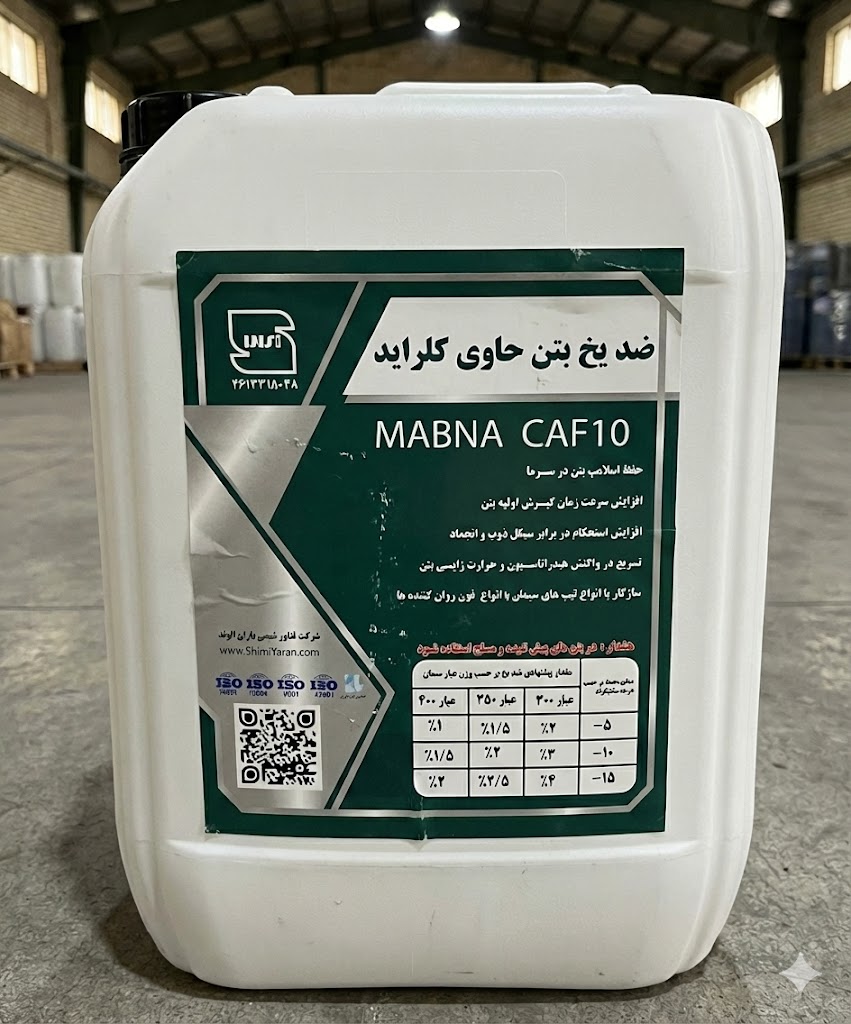
Applications
Liquid antifreeze containing chloride is specifically intended for use in the production of non-reinforced concrete.
How does chloride-based concrete antifreeze work?
Chloride-based concrete antifreeze works through two main mechanisms: accelerating the hydration process and lowering the freezing point of water. In terms of accelerating hydration, chlorides act as accelerators and increase the reaction rate between cement and water. This, in turn, shortens the setting time of concrete and allows it to reach its early strength more quickly.
On the other hand, chlorides lower the freezing point of water in the concrete mix. This means that the water present in the concrete does not freeze at lower temperatures, allowing the hydration process to proceed fully.
The advantage of using chloride-based concrete antifreeze is that it enables concreting in cold weather. By using this type of antifreeze, concreting can be carried out at temperatures below 5 °C. This allows contractors to continue their projects during the winter season and avoid delays and increased costs. Due to the shorter setting time, formwork can be removed sooner and subsequent construction stages can begin earlier, which in turn accelerates the overall project progress.
Considerations:
Please note that due to the presence of chloride in its formulation, liquid antifreeze for cementitious mortars is not suitable for use in reinforced concrete, as it causes corrosion of reinforcement bars and ultimately leads to concrete deterioration. Chloride-based liquid antifreeze is suitable for addition to plastering mortars and non-reinforced concretes.
Properties and Effects
Acceleration of the heat evolution reaction of concrete
Acceleration of the hydration reaction
Acceleration of initial setting time
Compatibility with all types of Portland cement
Considerations
Shelf life: One year in the original packaging
Storage conditions: In a sealed container, away from sunlight
Recommended storage temperature: +10 to +30 °C
Packaging type: 20-kg jerrycan
When concreting in cold weather, observing the following points is useful:
Clean the surfaces of formwork and reinforcement from water, snow, and ice.
If possible, warm them so that their temperature rises above 5 °C.
Ensure that the concrete temperature does not fall below 6 °C.
If possible, maintain the concrete temperature using suitable coverings.
If the ANTIFREEZE material freezes at very low temperatures, place it in a warm environment until it thaws. Strictly avoid applying direct heat.
During concrete production, it is preferable to mix the concrete antifreeze with the mixing water first and then add it to the dry components.
When using ready-mix concrete, pour the required amount of antifreeze into the mixer truck and begin concreting after complete mixing.
If necessary, aggregates—especially the mixing water—may be heated, and suitable coverings should be used to prevent heat loss or temperature reduction of freshly placed concrete.
Concrete antifreeze, by intensifying heat generation, helps accelerate the hydration reaction and increase the concrete temperature. Therefore, after adding the antifreeze during concreting, the temperature of no part of the concrete should fall below +5 °C. In such conditions, the hydration reaction will become very slow. Note that if the concrete temperature drops below 5 °C, this indicates insufficient antifreeze dosage.
Note: Shake the antifreeze container thoroughly before use to ensure uniformity of the material.
Concrete Antifreeze Dosage
In the presented table, the dosage is specified based on the percentage by weight of cement used.
Note: The equivalent weight of the used concrete antifreeze must be deducted from the mixing water. Under these conditions, concreting can continue without any change in slump (workability), and no loss of strength will occur.
Change in Dosage Amount
Using this admixture below or above the permitted range may only be carried out with the approval of the concrete technology experts of Alvand Chemical Yaran Industries. In case of simultaneous use of multiple concrete admixtures, be sure to contact the technical office of Chemical Yaran Alvand.
Recommended Concrete Antifreeze Dosage Table Based on Percentage of Cement Weight
Recommended Concrete Antifreeze Dosage Table Based on Percentage of Cement Weight | |||
Temperature in Degrees Celsius | Mix Design (kg/m³) | ||
300 | 350 | 400 | |
5- | 2 | 1.5 | 1 |
10- | 3 | 2.5 | 2 |
15- | 4 | 3.5 | 3 |
Contact our experts for product pricing and to place an order.
Reviews
There are no reviews yet.