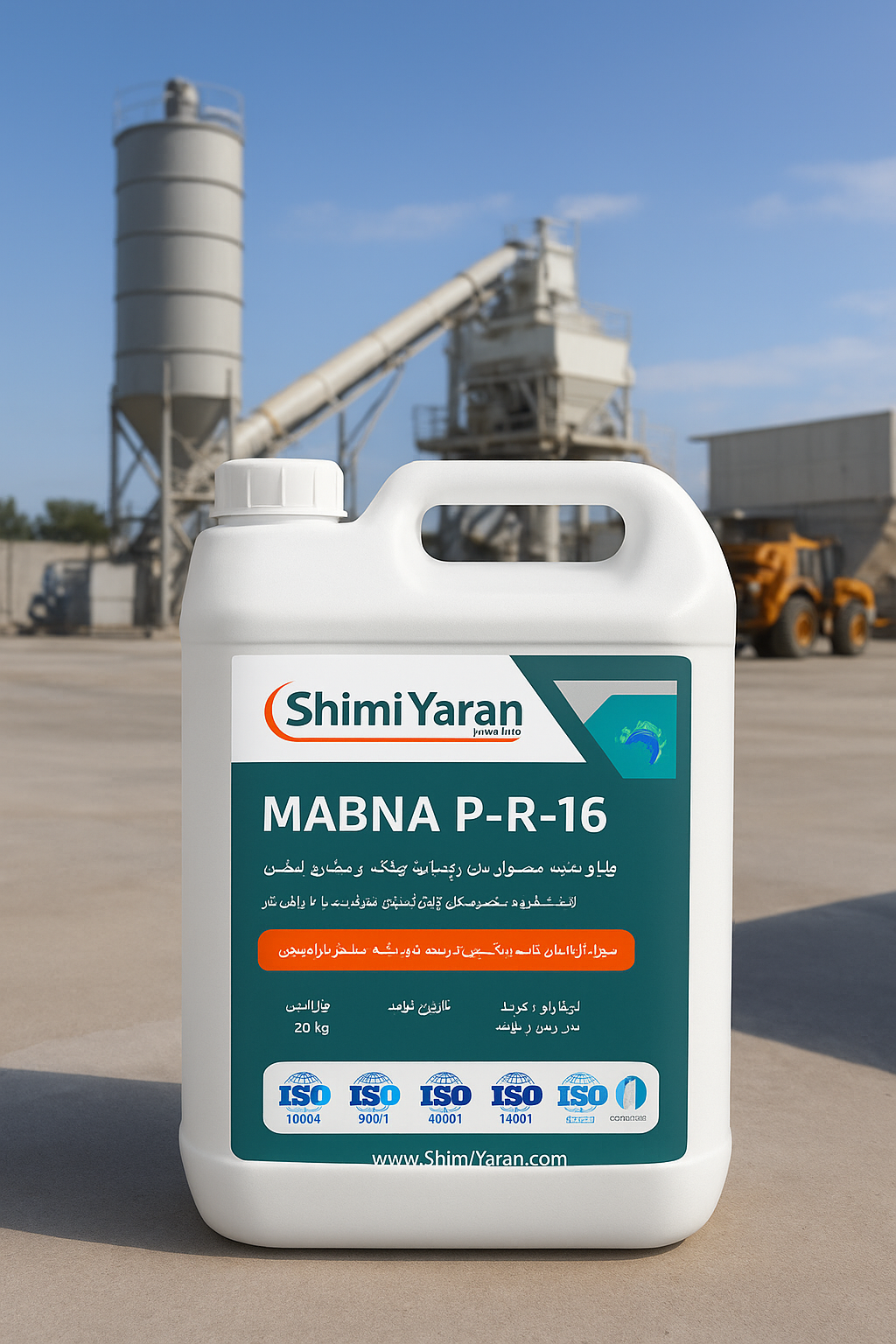
MABNA A-S-50 “Resin for Cement‑Based and Gypsum‑Based Artificial Stone.”

Product features

  • Improves rheological and mechanical properties, enhancing overall strength in artificial stone products
  • Forms strong molecular bonds between the cementitious/gypsum matrix and aggregate surfaces
  • Increases tensile strength, flexural strength, and interlayer adhesion
  • Enhances the final stone’s resistance to mechanical stresses and abrasion
  • Improves the ultimate resistance of the stone to environmental degradation factors such as moisture and freeze‑thaw cycles

Need Help? Contact Us (+989188126257)

Telegram

WhatsApp

MABNA A‑S‑50 — Advanced Polymeric Additive (Modified Polycarboxylate‑Ether Liquid Resin)

MABNA A‑S‑50 is an advanced generation of high‑performance modified polycarboxylate‑ether‑based liquid resin. This product has been specifically and precisely engineered to deliver a remarkable enhancement in the physical and chemical properties of manufactured artificial stone.

It exhibits excellent compatibility with cementitious binders (such as Portland cement) and gypsum binders (such as Alpha gypsum or Beta gypsum). The core functionality of this resin is based on its unique ability to disperse cement particles and fillers at a molecular level.

This effective dispersion not only provides exceptional mortar fluidity, but also significantly reduces the mixing water requirement. Reduction in the required mixing water leads to a lower water‑to‑cement ratio, which is the key factor in achieving higher density, reduced porosity, and maximum possible final strength of the product.

Key Performance Benefits

  • Enhanced Mechanical Strength: Significant improvement in compressive and flexural strength due to more complete void filling and reinforced hydration matrix.
  • Increased Durability: Higher resistance to dynamic loads and thermal stresses caused by wet–dry cycles.
  • Improved Abrasion Resistance: Final stone surfaces show greatly increased resistance to physical wear, making this critical for flooring and interior cladding applications.
  • Enhanced Gloss and Visual Quality: More uniform distribution of fine particles results in smoother, denser surfaces; polishing produces a noticeably higher gloss finish.
  • Reduced Surface Water Absorption: Lower surface porosity improves hydrophobic properties, boosting resistance to staining and moisture ingress.

Main Applications

  • Cement‑Based Artificial Stone (Quartz/Marble Artificial): Primarily used in the production of decorative slabs and tiles with high silica content or rich cementitious mortars.
  • Artificial Stone for Building Facades: Applied in pre‑cast facade panels and moulded elements requiring high resistance to weathering and freeze–thaw cycles.
  • Decorative Gypsum‑Based Stone (Casting Gypsum): Increases mechanical strength and lowers moisture absorption in gypsum‑based decorative products (e.g., interior décor, mirror frames, suspended ceilings).
  • High‑Detail Moulded Products: Ideal for fine components such as cornices, sculptures, decorative pots, and engineered wash basins requiring high flowability for complete mould filling.
  • Protective Coatings and Gloss Finishes: Serves as a key additive in overlay mortars to produce ultra‑smooth, abrasion‑resistant surfaces.
  • Suitable for Advanced Production Lines: Offers excellent performance in fully automated manufacturing systems where precise viscosity and setting‑time control are critical.

Advantages

  • Significant Reduction in Water‑to‑Cement Ratio: Enables production of high‑strength mortars with minimal required mixing water.
  • Higher Density & Lower Porosity: Achieved by eliminating entrapped air and optimising particle compaction inside moulds, which markedly reduces open porosity.
  • Improved Mortar Flowability: Facilitates easy moulding and complete filling of complex mould shapes without excessive vibration or segregation of aggregates from the paste.


Product Safety

  • This material is not classified as hazardous to health or the environment.

  • Avoid direct contact with eyes and ingestion.

  • In case of contact with skin or eyes, rinse immediately with plenty of water.

  • If ingested, seek medical attention immediately.

  • This material is non-flammable.

  • Do not discharge into surface or groundwater; dispose of waste through a wastewater treatment facility.

Method of Use

  • Resin Preparation: MABNA A‑S‑50 liquid resin is supplied ready for use and does not require dilution with solvents.
  • Initial Mixing of Water and Resin: For optimal superplasticizing performance, the resin should first be introduced into a portion of the total mixing water required for the batch and homogenised thoroughly. This step ensures full activation of the polycarboxylate polymerisation mechanism.
  • Addition of Dry Solids: Dry materials (cement, aggregates, fillers, and powdered pigments) should be gradually added to the resin–water mix while maintaining adequate mixing speed.
  • Additive Addition Sequence Control: When using other additives such as liquid pigments, fibres, or non‑polymeric plasticisers, the sequence of material addition must be carefully controlled to prevent chemical interaction or reduction in performance. It is generally recommended to add this resin as the final admixture after cement and water, unless otherwise advised by the company’s technical specialist.
  • Mixing Time: The mixing duration must be sufficient to achieve uniform dispersion of all components, while avoiding excessive mixing that may lead to unwanted air entrapment.

Recommended Dosage

  • Standard initial trial dosage: 0.4 – 0.6% of the total dry binder weight (cement and/or gypsum).
  • Suggested ranges by application:
    • Cement‑based artificial stone: 0.5 – 1.0%
    • Gypsum‑based artificial stone: 0.3 – 0.7%
    • Ultra‑high‑flow systems: up to 1.2% (use with caution)
  • Final dosage should always be determined after practical pilot tests under actual project conditions (including ambient temperature and cement type) to achieve the optimal balance between flowability and setting time.

Storage Conditions

  • Shelf life: 1 year in original, sealed packaging under proper conditions.
  • Optimal storage temperature: +5 °C to +35 °C.
  • Protection: Store away from freezing and direct sunlight.
  • Packaging: 20 kg jerrycans and 1000 kg IBC tanks.
Order registration and consultation

Contact our experts for product pricing and to place an order.

Direct contact with supporters

To connect directly with the group’s supporters on social media, click on the options below.

Comments

Reviews

There are no reviews yet.

Be the first to review “MABNA A-S-50 “Resin for Cement‑Based and Gypsum‑Based Artificial Stone.””

Your email address will not be published. Required fields are marked *

انتخاب زبان سایت